Launching
As the phrases cell culture container and bioprocess system regularly employed, occur notable disparities separating the two. An individual growth system generally denotes a straightforward container primarily focused on providing a suitable ecosystem for organismal propagation. Industrial fermenters, yet, are crafted platforms incorporating innovative governance – including acidity adjustment, thermal environment modulation, and aeration supply. Essentially, a cell growth system is a elevated specialized form of culture tank designed for meticulous biofabrication applications.
Coordinated Processing Units: Expanding Biotechnological Manufacturing Output
This mounting call for medicinal bioproducts together with biofuels behaves as motivating important progress involving bioengineering methodology. Collective fermenters contribute an effective approach intended for increase further production and also maintaining steady caliber. Via handling various same bioreactor structures across concurrent, biological operations can accomplish higher throughput and refined process supervision, conclusively reducing price and enhancing commercialization.
Membrane Filtration System Cohesion: Enhancing Reaction Vessel and Bioprocessors Performance
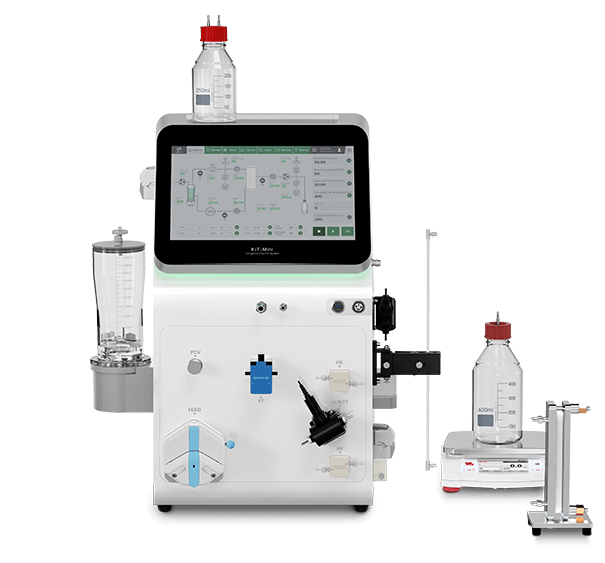
Integrating Cross Flow Filtration systems cohesively with fermenter operations presents a critical opportunity to amplify overall workflow proficiency. This approach allows for continuous cell removal, minimizing downtime and optimizing product quality. Points include deciding on appropriate purification materials, improving flow rates, and establishing automated regulation systems.
- Boosted cell compactness
- Cut-down industrial financial burdens
- Constant product character
Fermenter Engineering Advancements: The Rise of Parallel Systems
A climbing demand about biopharmaceuticals alongside high-tech biofuels prompted caused significant improvements in bioreactor engineering. Traditionally, bioreactor manufacturing devoted on separate modules, but increasingly parallel bioreactor clusters stand as securing traction. Those systems enable researchers to run countless reaction runs side by side, yielding to expedited optimization turns together with better gains.
- Pros feature augmented throughput.
- Those setups enable robust bioprocess enlargement.
- Parallel setups boost for evaluating detailed biochemical characteristics.
Bioprocess Container Engineering: Specific Exhaustive Reference for Microbial Cultivation
Certain thorough reference to bioreactor development provides a important appreciation for biotechnological manufacturing practitioners. Vessels are core instruments in modern biotech industries, providing the synthesis of several bio-compounds – like healthcare products, culinary products, and manufacturing mixtures. The document will outline essential features of biological container development, including factors like acid-base balance, thermal environment, dissolved gas levels, and stirring.
- Fermentation Unit Styles & Configurations
- Manufacturing Supervision Techniques
- Increase Issues & Solutions
- Disinfection Methods & Certification
Selecting the Right Cell Culture System: From Fermenters to Next-Generation Models
Identifying certain appropriate bioreactor is an essential decision for all bioprocess production. Originally, growth containers served in the role of the basic option, offering unique fairly uncomplicated yet cost-effective alternative. On the other hand, while biological production transforms, noticeably elaborate processes involve progressive configurations. Such emerging bioreactors are able to feature aspects consisting of accurate thermal regulation adjustment, computerized alkaline level modulation and instant assessment potentials.
- Account for scale requisites.
- Examine function variables.
- Value monetary thresholds.
Simultaneous Cell Culture System Designs: Perks and Employments
Combined bioreactor designs offer significant gains compared to distinct bioprocess unit configurations, particularly when expanding production organic operations. These groups allow for simultaneous development of many cultures, amplifying overall output and shortening production interval. Tasks are varied, stretching from just starting pharmaceutical research and polishing of bioprocessing elements, to huge manufacture of bio-medications, alternative energy, and specialty chemicals.
- Concurrent layouts augment efficiency.
- Enables synchronized series completion.
- Diminishes aggregate operational span.
Tangential Flow Filtration System Operations: Simplifying Bioprocessor Refinement Processing
The crossflow membrane filtration protocol supplies a major boon in improving the clearing of reaction container output. Typically, the process consists of preliminary focusing steps, subsequently solution substitution to reach the necessary compound purity. This integrated sequence minimizes manual effort and increases overall technique competence while retaining agent soundness and volume. Finally, the produced solution is available for downstream employments.
